We’ve been busy, trying to get settled in to a new place. There’s lots to discover, but also a fair few hoops to jump through. One of those hoops is registration with the local authorities.
My first attempt to deal with the problem of registration came in June, when I was here to scout out a home for the year. Registering with the local authorities is a process that will mystify most North American, but is one that the Swiss take for granted. When a person moves to a new location in Switzerland, she or he must report to an administrative office (in Neuchâtel, it’s called the “Contrôle des habitants“) within fourteen days or face the wrath of the authorities. Or something. (It’s not entirely clear what happens if one doesn’t register — but it can’t be good.)
At any rate, when I visited the office in June, I was told that I need a livret de famille — a family record book. This is an official document, apparently; when I explained that I had no such thing, the young woman at the counter made her astonishment plain. And then insisted. And I insisted, telling her that neither Canadians nor Americans have an official family record book. She clearly did not trust me on this. So she asked me to wait, got up, and disappeared. Which was fine for me — but the line that had formed behind me was growing impatient as the time dragged on. She was gone for a good ten minutes, but when she came back, she declared quite simply, “J’ai eu tort.” “I was wrong.” Astonishing. It turned out that all I needed was my marriage certificate. She looked up when she told me this, and asked, with just a glimmer of a hint of a smile, whether Canadians have marriage certificates.
Nevertheless, for us registration was astonishingly easy. The kids and I hold Swiss passports, so we didn’t have to worry about getting a “permis de séjour” (residence permit). Yet to register, the children and I had to provide something called an “acte d’origine.” This is a document peculiar to Switzerland, as far as I know. In most passports — including the U.S., Canadian, and British — one of the key elements is place of birth. The Swiss passport doesn’t include a place of birth — instead, it includes the “lieu d’origine,” or place of origin. Citizenship in Switzerland isn’t national, but linked to this place of origin. So I’ve somehow inherited three places of origin, all of which have been duly passed on to my children. So to register in a new place, Swiss citizens must present a document — the acte d’origine — that proves not only a link to a community, but from the community to a canton and from the canton to Switzerland. I didn’t have a copy of this document to begin with, so got in touch with one of my three places of origin, which duly — but for a surprisingly steep fee — mailed me copies of these documents, which I then turned in to the Contrôle des habitants. Along with a really bad passport photo and another fee. I also had to provide a copy of our signed lease. Sophia’s registration wasn’t much more complicated — she had to furnish her passport, we had to supply that magical marriage certificate (yup, still valid after eighteen years), and Sophia had to provide a passport photo of her own. (Hers is bad, but not as bad as mine.)
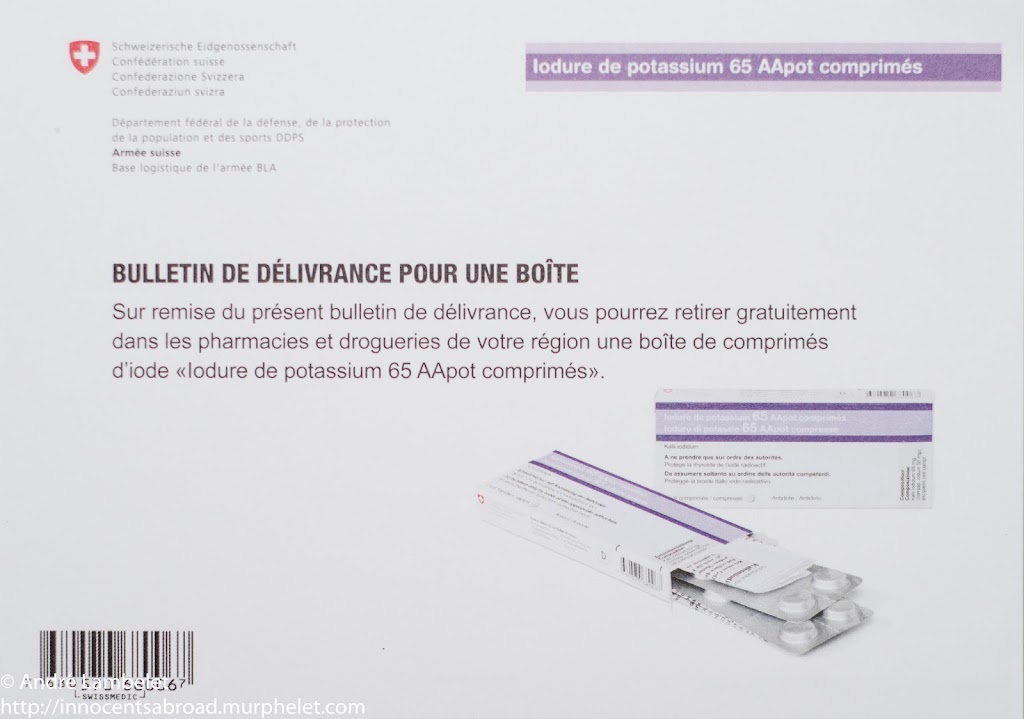
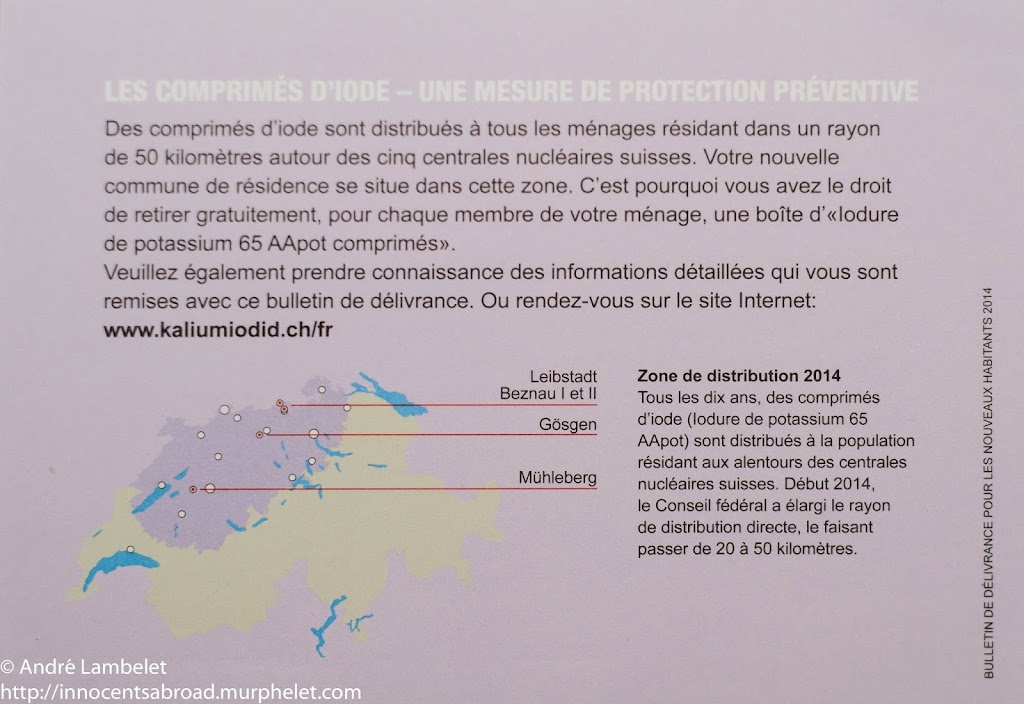
The person who helped us was cheerful, informative, and helpful. She explained a number of things that weren’t self evident to us — and provided us with a whole slew of coupons that allows us to get reduced fares on public transit, get cheap entry to the swimming pool and the ice rink (in season, of course), and, with a wry smile, presented us with these:
These are coupons for free iodine — in case the nuclear power plant in Bern goes kaplooey. Cheerful thought.
This registration thing is a peculiar business. Every Swiss resident is registered, counted, controlled. There’s no direct or obvious malice here. The point is to gather information for the census, to provide documents to residents — including one called the “Attestation de domicile et de vie” (“Certificate of domicile and of life”) that, the website helpfully notes, is “necessary every time that a person is asked to prove that she is alive.”
The Swiss take registration for granted. It astonishes them to think that we can move from town to town or province to province without reporting to the local authorities. One of my cousins asked — quite sincerely — how society can function if people aren’t registered. And there is a logic to that question. We tend to rely on blunt (and, with the abolition of the long-form census in Canada, increasingly blunt) tools to tell us where social services are necessary. The Swiss, however, know with astonishing precision how many people live where. And if they don’t seem to ask very detailed questions about demography, they do know very precisely how many children and senior citizens live in an area.
Yet if there is some utility to this — for school planning, for instance, or for providing assistance to the aged — it’s also a potentially terrifying tool. One of the very questions asked of us was whether we wanted to note our religion in our registration. Good and tidy records may be useful for good causes — but they can also have more nefarious purposes.

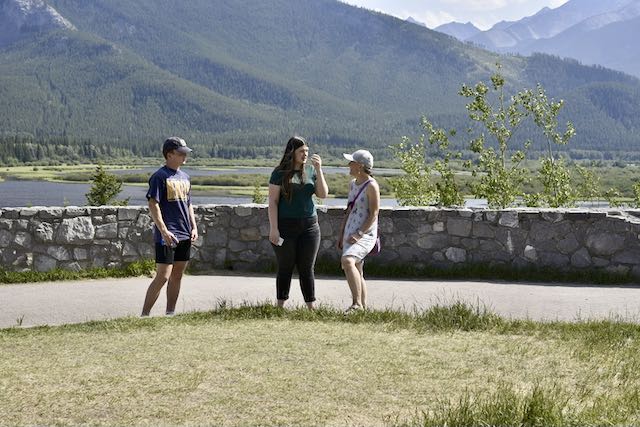
 We did eventually stop, just long enough to stretch our legs, snap a few pics, and switch drivers.